Minimalist Branch: A Designer’s Real-World Embroidery Review
As someone who’s stitched hundreds of designs across apparel, home goods, and boutique merchandise—both for clients and my own craft business—I opened Minimalist Branch with quiet curiosity. Not hype. Not assumptions. Just the kind of focused attention you give a new tool before trusting it in a client’s sweatshirt or a baby’s onesie. What I found wasn’t just “pretty”—it was purposeful. Calm, intentional, and quietly versatile.
First Impressions: Less Is Anchored, Not Empty
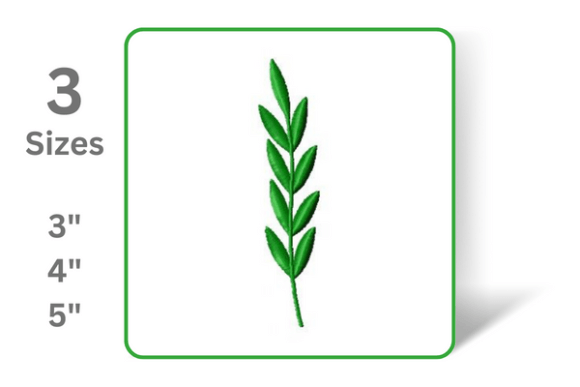
Minimalist Branch lands like a breath of air: clean line work, subtle curvature in the stem, three soft blooms spaced with breathing room—not symmetry for symmetry’s sake, but balance that feels organic. There’s no filler. No dense fill stitch crowding the negative space. Instead, it leans into satin stitch for petals and a delicate running stitch for fine branch detail—enough texture to read clearly at 3–4 inches wide, but never busy. It doesn’t shout. It invites pause. That makes it ideal for projects where elegance matters more than impact: nursery pillows, linen tea towels, monogrammed aprons, or delicate baby embroidery on gauzy cotton.
Where It Shines—And Why Customers Notice
I tested Minimalist Branch on a natural canvas tote, a midweight organic cotton sweatshirt, and a set of kitchen towels—all common small shop products. On the tote? Crisp, grounded, and artisanal—not craft-fair cliché. On the sweatshirt? It held its shape beautifully through washing (with proper stabilizer), and customers consistently commented on how “thoughtful” and “grown-up” it looked compared to busier floral motifs. On the towels? The open layout meant zero puckering, even after repeated laundering.
This is where Minimalist Branch quietly builds trust. It reads as handmade *and* professional—not DIY amateur. That duality matters for Etsy sellers and boutique owners: buyers pay more for pieces that feel considered, not crowded. As a digital embroidery file, it also translates cleanly into printable mockups. Whether you’re listing on Etsy or pitching to a local café for branded aprons, Minimalist Branch gives your presentation polish without demanding extra design labor.
Real-World Caution Zones
Don’t mistake minimalism for universality. This design has graceful limits—and knowing them saves time, thread, and customer complaints.
- Small hoop sizes (under 4" x 4"): The branch length and bloom spacing assume some breathing room. Tight cropping risks losing visual rhythm—test before committing to a cap or curved surface.
- Textured or napped fabrics: On terry cloth towels or fleece, the fine running stitch can disappear. Consider reinforcing with a light topping stabilizer—or switch to a slightly bolder variant if available.
- Thin or stretchy knits: While it works on t-shirts, skip lightweight jersey unless you use cutaway + tear-away combo stabilizer. The satin stitch petals need firm support to stay smooth.
- Dark fabric backgrounds: The design relies on contrast, not heavy density. Use high-sheen thread (like rayon or premium polyester) to keep blooms luminous—not muddy—on navy or charcoal.
- Frequent-wash items (baby clothes, dish towels): Confirm stitch density isn’t too low—running stitches should be tight enough to resist fraying over time. When in doubt, run a quick wash test on scrap fabric first.
Design Integrity Meets Commercial Sense
What sets Minimalist Branch apart in a sea of single flowers isn’t just aesthetics—it’s adaptability without compromise. It reads equally well as a standalone embroidered patch, a subtle corner accent on a pillow cover, or the central motif on a holiday gift towel. Because it avoids tiny interior details or micro-stitching, it scales reliably from 2.5" (for a child’s cap) to 6" (for a wall hanging) without distortion.
For creative entrepreneurs, that means fewer variants to manage. One embroidery file serves multiple product lines: custom apparel, home decor, personalized gifts—even wedding favors (think linen sachets or napkin corners). And because it sits comfortably in the Single Flowers category without leaning into trend-chasing botanicals, it stays relevant season after season—no refresh fatigue.
Practical Designer Notes Before You Stitch
Before adding Minimalist Branch to your next finished product or digital product bundle, take these five minutes:
- Test on scrap fabric—same type, same stabilizer, same thread colors you’ll use commercially.
- Check thread color contrast in natural light and under store lighting. Soft pastels pop on cream; deep teals hold weight on black.
- Review stitch density in your embroidery software. Look for gaps in satin areas or overly sparse running stitches—adjust if needed for your machine’s tension.
- Confirm hoop size compatibility for your target application. If stitching on curved surfaces (caps, sleeves), verify the design fits within your smallest usable hoop with margin.
- Inspect small details at 200% zoom: are petal edges clean? Does the branch taper naturally? Any stray jump stitches?
Also—don’t skip the black-and-white mockup test. A design this refined must hold its voice without color crutches. If it reads weak in grayscale, re-evaluate thread choice or placement.
Final Thought: A Quiet Design With Real Weight
Minimalist Branch won’t dominate a tradeshow booth. But it will earn repeat orders from customers who choose quality over clutter—and return for matching pillow covers, towels, and baby blankets. It supports brand consistency for small shops because it’s distinctive without being loud, simple without feeling unfinished. For embroidery designers and craft business owners, that’s rare. That’s valuable. That’s why I’ve added it to my go-to kit—not as filler, but as foundation.