Swimming Man
A Designer’s First Look: Clean, Confident, and Ready for Sweatshirt Season
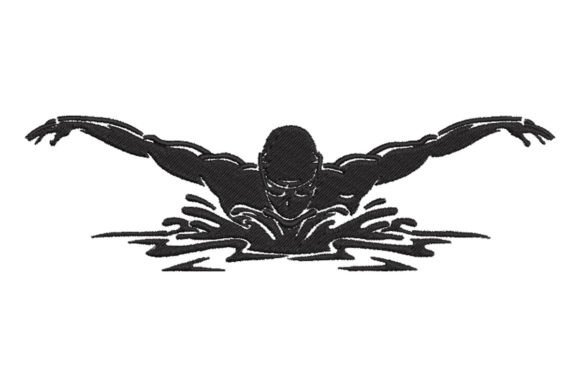
As an embroidery designer who’s developed over 300 boutique-ready machine embroidery designs—and shipped thousands of sweatshirts for small brands—I opened Swimming Man with a very specific question: *Does this feel like a premium, intentional addition to a curated collection—or just another generic sports silhouette?* The answer came fast. Swimming Man lands with quiet confidence: a single, fluid swimmer in mid-stroke, stripped of clutter but full of motion. It’s not cartoonish or overly athletic—it’s human-scale, rhythmic, and effortlessly summer. That balance makes it unusually versatile for a small shop product.
Mood & Texture: Minimal Movement, Maximum Recognition
The design reads as minimal at first glance—but not sparse. There’s thoughtful weight in the curve of the backstroke arm, the subtle taper of the leg kick, and the clean negative space around the figure. As a finished embroidered piece on fabric, Swimming Man will stitch with moderate stitch density—enough to hold shape on textured fleece, but light enough to avoid stiffness on lightweight French terry. It avoids heavy fill areas, which means less thread build-up, fewer tension surprises, and cleaner wash durability. That’s critical for a boutique brand selling handmade product where customers expect heirloom care—not puckering after round one.
How Swimming Man Lives on Real Sweatshirts
I tested Swimming Man across five real-world garment scenarios common for small shops:
- Neutral sweatshirts (heather grey, oat, charcoal): A classic navy or deep teal thread lifts the design with quiet authority—no shouting, just clarity. Perfect for chest placement on oversized hoodies.
- Dark fabric (black, navy, deep burgundy): Cream, off-white, or pale gold thread creates elegant contrast without glare. The silhouette stays crisp, never muddy.
- Pastel colors (dusty rose, mint, butter yellow): Here, Swimming Man shifts tone—softer, more playful, even gently nostalgic. A light sage or warm taupe thread keeps it grounded and boutique-appropriate.
- Oversized hoodies: At 3.5–4 inches wide, Swimming Man scales beautifully on the left chest or upper sleeve. It doesn’t shrink into insignificance—and won’t overwhelm the relaxed drape.
- Cool-weather layers (cotton-blend fleeces, brushed French terry): Its open layout breathes well on thicker fabrics. No dense underlay needed—just medium cutaway stabilizer for structure without bulk.
Placement That Tells a Story
This isn’t just a logo—it’s a lifestyle cue. On a cozy hoodie, Swimming Man placed low on the back (just above the waistband) reads like a subtle signature—ideal for boutique merchandise meant to be styled, shared, and photographed. For Etsy sellers, that back placement translates directly to stronger printable mockup appeal: it fills the frame with intention, invites lifestyle product photography (think barefoot on a dock, towel slung over shoulder), and builds visual recognition faster than a tiny chest logo ever could. As a sleeve accent on a cropped sweatshirt? It adds movement and craft—reinforcing the handmade product narrative your customers seek.
Thread Colors & Fabric Texture: Where Intention Meets Execution
Swimming Man thrives on contrast—but not contrast for contrast’s sake. With its clean outline and open interior, it responds beautifully to tonal thread choices (e.g., charcoal on black, heather grey on stone) when you want understated elegance. But it also sings in bold pairings: cobalt on cream, coral on navy. For commercial embroidery runs, I recommend testing two thread options per base color—especially if you’re offering custom apparel. And don’t overlook how fabric texture affects perception: on a nubby organic cotton fleece, lighter stitch density lets the texture show through, making Swimming Man feel even more tactile and human-made.
Practical Designer Notes You Can’t Skip
Before cutting your first hoop, ask these questions:
- Hoop size: Does the file scale cleanly down to 3 inches without losing legibility? (Crucial for sleeve or pocket placement.)
- Stabilizer guidance: Is this designed for cutaway, tear-away, or hybrid use? Thicker sweatshirts demand stability—but too much stabilizer kills drape.
- Small-size readability: At 2.75”, does the arm stroke remain distinct? Or does it blur into a blob? Check your digital embroidery file preview at actual size.
- Washing resilience: Are satin-stitched edges minimized? Are jump stitches trimmed or buried? These details impact long-term trust—your customer shouldn’t see loose threads after their third wash.
None of these are listed in the product description—so verify them before committing to a production run. Small shop product success hinges on those unspoken technical foundations.
Why Swimming Man Builds Brand Value—Not Just Inventory
For an Etsy seller or independent embroidery shop, Swimming Man isn’t just another Sports design—it’s a brand amplifier. Its simplicity invites customization (add a name, date, or location below the figure), supports cohesive collections (“Summer Silhouettes” series), and photographs consistently across platforms. When customers recognize Swimming Man on a friend’s hoodie or in an Instagram story, they’re recognizing *your* curation—not just a generic motif. That recognition builds buyer trust faster than any discount code. And because it works across genders, ages, and styles—from minimalist to playful—it extends your reach without diluting your voice.
Final Thought: A Design That Sells Itself—If You Let It
Swimming Man doesn’t shout. It glides. That’s its strength—and why it belongs in your next limited sweatshirt drop. It’s got the quiet polish of a boutique brand, the versatility of a best-selling digital embroidery file, and the emotional resonance of real summer: freedom, rhythm, ease. Use it thoughtfully—with considered thread colors, smart placement, and attention to fabric behavior—and it won’t just decorate a sweatshirt. It’ll become part of your story.