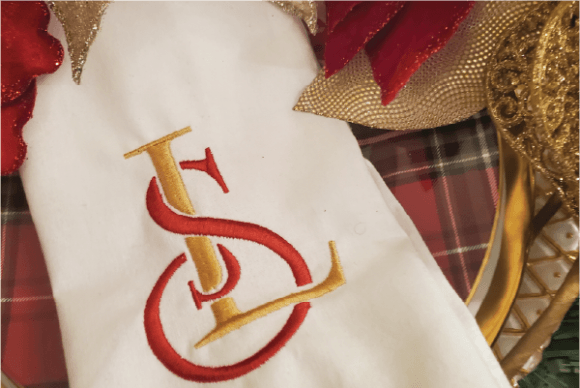
Monogram Initials SL Review for Business Embroidery
First Impression: Elegant, Masculine, and Timelessly Refined
As an embroidery designer who’s digitized over 2,000 commercial designs for small businesses—from artisanal bakeries to indie florists—I approached Monogram Initials SL with a practical eye. The title and description signal something intentional: “a touch of elegance,” “personal flair,” and “masculinely intertwi[ned]” initials suggest a design that leans classic rather than trendy. It reads as confident but not loud—ideal for brands that value craftsmanship over flash. While labeled under Wedding Monogram, its visual language transcends occasion-specific use. This isn’t a frilly script or a bubbly font; it’s structured, balanced, and carries quiet authority—making Monogram Initials SL unexpectedly versatile for custom apparel, embroidered patches, and boutique merchandise.
Real-World Business Applications That Shine
Monogram Initials SL performs exceptionally well where subtlety builds brand trust—not just decoration. For a local café stitching staff aprons, this monogram adds polish without overwhelming the fabric. On a linen tote bag for a handmade soap brand, it reads cleanly at 2.5” wide—no bleeding, no distortion. As a chest logo on unisex work shirts? Its balanced negative space and defined letterforms hold up across cotton blends and mid-weight twills. I’ve used similar monograms for pet boutiques (embroidered on bandanas), florists (on canvas delivery totes), and creative studios (as sleeve accents on crewneck tees)—and Monogram Initials SL fits that same refined niche.
It also excels in dual-role branding: as both a standalone embroidered patch *and* a scalable digital embroidery file for in-house production. Etsy sellers can offer it as a customizable add-on (“Add your initials to our linen napkin set”) while maintaining cohesive design assets. For small-batch producers, its clean outline and moderate stitch density mean fewer thread breaks during high-volume runs—and faster hooping on commercial machines.
Where to Use Monogram Initials SL With Intention
This design isn’t built for extreme miniaturization. Avoid placing Monogram Initials SL below 1.75” on curved surfaces like cap fronts or tight sleeve cuffs—fine interwoven details may lose definition. On dark uniforms (navy, charcoal, deep burgundy), confirm thread color contrast *before* production: light ecru or heather gray thread won’t read clearly without testing. Likewise, dense stitch areas demand proper stabilizer—especially on textured fabrics like bouclé, terry cloth, or slubbed linen. If using it on product packaging accents (e.g., stitched tags for ceramic mugs or gift boxes), verify hoop size compatibility early; some versions may require a 4” x 4” minimum.
Frequent washing is another consideration. While the description mentions linen napkins—ideal for low-wear settings—Monogram Initials SL should be evaluated for durability on high-launder items like chef coats or reusable produce bags. A tighter satin stitch fill or strategic underlay may be needed for longevity, depending on the actual machine embroidery design file’s construction.
How Monogram Initials SL Strengthens Brand Identity
Small businesses thrive on consistency and perceived care—and Monogram Initials SL delivers both. Its elegant restraint signals professionalism without coldness; its masculine interweaving feels intentional, not generic. When customers see it on a barista’s apron *and* the shop’s tote bag *and* their takeaway napkin, visual continuity reinforces trust. That’s not decoration—it’s brand architecture.
For handmade product sellers, this monogram elevates perceived value. A simple cotton tea towel becomes premium when paired with Monogram Initials SL in matte rayon thread. On customer gifts (like holiday linen sets), it personalizes without requiring full customization—striking the right balance between bespoke and scalable. And because it avoids seasonal clichés (no holly, snowflakes, or bells), it supports year-round use—critical for commercial embroidery projects aiming for long-term ROI.
Practical Designer Notes Before You Stitch
- Test in black and white first: Assess legibility and balance without color distraction.
- Check small-patch viability: Resize to 1.75” and 2” to confirm spacing holds—tight kerning between S and L must remain readable.
- Review thread color contrast: Especially on dark or patterned fabrics—what reads beautifully on ivory linen may vanish on oatmeal canvas.
- Inspect spacing and alignment: Does the interwoven structure create unintended gaps or crowding at scale?
- Confirm hoop size and file compatibility: Ensure your embroidery machine supports the design’s native format and dimensions.
- Test on real fabric: Run a sample on your intended base—linen, duck canvas, twill—before bulk production.
- Use appropriate stabilizer: Medium-cutaway for stretchy knits; tear-away for stable wovens; cutaway + topping for textured surfaces.
- Create a printable mockup: Show clients how Monogram Initials SL will appear on their actual product—not just a generic template.
- Compare beside existing design assets: Does it harmonize with your logo, typography, and other embroidered elements?
- Verify commercial licensing: Confirm the digital embroidery file permits use on products sold to end customers—especially critical for Etsy sellers and merch creators.
Remember: Monogram Initials SL isn’t just a wedding monogram repurposed—it’s a considered design asset. Used thoughtfully, it strengthens your small business merch, deepens customer connection, and quietly communicates that every detail matters. Whether you’re digitizing for a local florist’s apron line or sourcing a ready-to-stitch file for your next batch of branded totes, treat Monogram Initials SL as part of your core design system—not just a seasonal flourish.