Adorable Flowers: A Small Business Embroidery Review
First Impression: Friendly, Versatile, and Ready for Branding
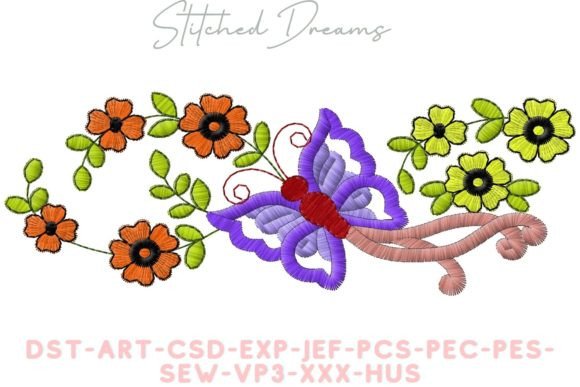
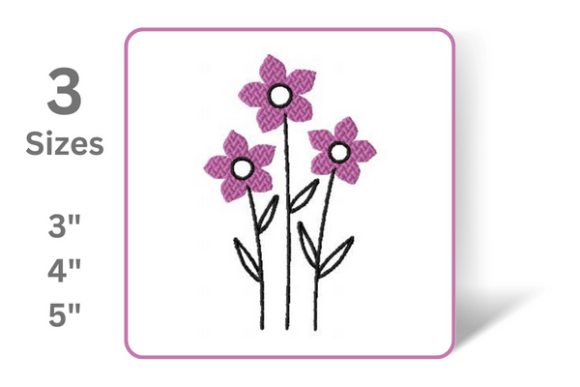
As an embroidery designer who’s developed hundreds of commercial designs for cafés, boutiques, florists, and handmade brands, my first read on Adorable Flowers is immediate and encouraging: it’s not just decorative—it’s brand-ready. The name suggests warmth and approachability, while “Bouquets” as its category signals cohesion, softness, and natural rhythm—not rigid symmetry or sterile minimalism. This isn’t a stiff corporate emblem; it’s a machine embroidery design that leans into charm without sacrificing polish. For small business merch, that balance is gold: friendly enough for a neighborhood bakery’s apron, refined enough for a premium pet brand’s embroidered patch.
Real-World Performance Across Merchandise Types
Adorable Flowers shines where small businesses need consistency and personality—especially in high-touch branded items. On staff uniforms and aprons, its organic flow reads clearly at chest level without overwhelming the garment. As cap embroidery, it holds up well on curved fronts when scaled to 2.5–3 inches wide—its implied movement (petals, stems, gentle layering) translates naturally across convex surfaces. For tote bag design, it works beautifully centered near the top handle seam or subtly repeated along a side gusset. And on product packaging accents—like stitched tags on handmade soap wraps or linen tea towels—it elevates perceived value instantly.
It’s also highly adaptable for Etsy sellers and crafters launching handmade product lines. Paired with neutral thread colors (ecru on oat linen, sage green on charcoal canvas), Adorable Flowers supports a cohesive visual language across aprons, tote bags, and customer thank-you cards—even when used as a printable mockup base for client presentations. In custom apparel projects for local studios or creative workshops, it adds signature warmth without demanding attention away from the wearer’s voice or mission.
Where to Use Adorable Flowers Thoughtfully
Like any strong embroidery file, Adorable Flowers requires intentional placement—not because it’s flawed, but because its character is so distinct. Avoid shrinking it below 1.75 inches for embroidered patches: delicate petal edges may blur or stitch density could overwhelm fine mesh stabilizer, especially on textured fabric like twill or heavy canvas. Cap embroidery demands extra caution on structured front panels—if the design includes fine interior outlines or tight loops, test those elements at actual size before bulk production.
Dark uniforms? Absolutely viable—but only with high-contrast thread colors. A pale yellow bloom against navy won’t register; mustard, coral, or true white will. Also, remember: frequent washing impacts longevity. If stitching too densely clusters in one area (e.g., layered centers), reinforce with cutaway stabilizer and confirm hoop size allows full coverage without re-hooping mid-stitch. Always test Adorable Flowers on your exact fabric—especially terry cloth towels or slubbed organic cotton—where pile or irregular weave can distort detail.
Brand Identity Impact: More Than Just Pretty Stitches
This is where Adorable Flowers truly earns its place in a small business’s design assets. Unlike generic floral motifs, it carries quiet intentionality—soft curves suggest care; varied petal shapes imply authenticity; balanced negative space invites breathing room, not clutter. That translates directly to customer trust: a café’s embroidered apron with Adorable Flowers feels hand-curated, not mass-printed. A florist’s tote bag using the same design builds recognition across touchpoints—uniforms, packaging, event merch—without repeating a logo verbatim.
For handmade product sellers, it reinforces craftsmanship without shouting “handmade.” It says, *we pay attention to detail*, *we honor natural beauty*, *we’re rooted but not rustic*. That nuance strengthens brand identity far more than a bold sans-serif would on the same apron. And because it’s inherently scalable and color-flexible, it grows with your business—from Etsy launch to wholesale partnerships—maintaining visual consistency across every finished product.
Practical Designer Notes Before You Stitch
- Test in black and white first: Confirm readability and spacing without color distraction—especially important for cap embroidery and small patch sizes.
- Check minimum viable size: Run a 1.75-inch version on scrap fabric matching your end-use material. Look for legibility of stem connections and petal separation.
- Review thread color contrast carefully—especially on dark or busy backgrounds. What reads as “adorable” in pastel may vanish without proper luminance pairing.
- Inspect spacing between elements: Tight gaps between petals or leaves can cause thread nesting or skipped stitches on low-tension machines.
- Confirm hoop size compatibility with your embroidery machine and intended application—some bouquets require larger frames for smooth hooping on bulky items like tote bag handles.
- Always test on real fabric, not just stabilizer alone. Fabric texture changes tension behavior dramatically.
- Use appropriate stabilizer: Cutaway for stretchy knits, tear-away for stable wovens, and fusible + tear-away combo for lightweight linens.
- Create a client-approved mockup—not just digital, but stitched—before committing to bulk runs. Seeing Adorable Flowers in context builds confidence faster than any PDF.
- Compare beside other design assets: Does it harmonize with your current logo, typography, and packaging? Does it stand out—or get lost—in your visual ecosystem?
- Verify commercial licensing before use in paid merchandise. Since this is a digital embroidery file marketed for apparel and home decor, confirm rights cover resale, branding, and small business merch distribution.
Ultimately, Adorable Flowers isn’t just another bouquet embroidery—it’s a flexible, emotionally intelligent design asset. When applied with intention, it helps small businesses say something genuine: *We grow with care. We welcome warmly. We stitch our values—literally—into everything we make.* That’s not decoration. That’s brand storytelling, one stitch at a time.