Water Splash: A Refreshing Shape for Craft Fair Sales
First Impression: Minimal, Modern, and Instantly Recognizable
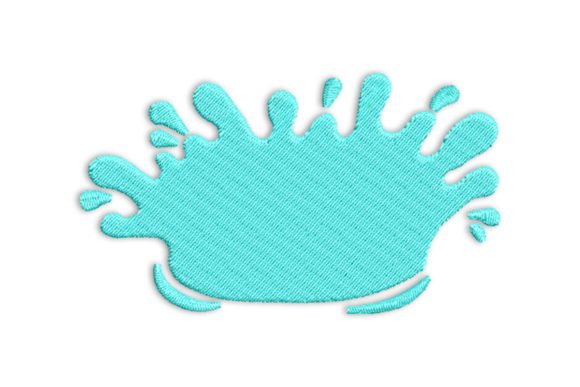
As an embroidery designer who’s prepped over 200 craft fair booths, my gut reaction to Water Splash is immediate: it’s a clean, modern shape — not cutesy, not rustic, not overly decorative. It lands somewhere between minimalist and expressive, like a single brushstroke of movement frozen in thread. That’s gold at a handmade market. Shoppers don’t pause to decode meaning; they feel it. “Splash” suggests energy, freshness, playfulness — perfect for spring markets, coastal boutiques, or wellness-themed shops. And because it lives in the Shapes category, it avoids seasonal or literal constraints (no holiday motifs, no faces, no text), making Water Splash endlessly repeatable across product lines.
Where Water Splash Shines on Craft Fair Products
In my booth setup — think linen tea towels, heavyweight canvas totes, cotton aprons, and structured fabric pouches — Water Splash performs strongest when used as a *focused accent*, not a filler. Here’s how it plays out:
- Tote bag design: Centered on the lower corner of a natural canvas tote? Yes. Bold, legible, and quietly confident — especially with tonal thread (e.g., pale blue on oat). Avoids looking “busy” while still signaling handmade care.
- Apron embroidery: Top-left chest placement works beautifully. The organic curve of the splash echoes the drape of an apron, adding subtle motion without competing with pockets or straps.
- Tea towel embroidery: Ideal for the upper right corner of a flour-sack or waffle-weave towel. Its open shape reads clearly even against textured fabric — unlike dense florals that blur.
- Embroidered patch: This is where Water Splash becomes a versatile design asset. As a sew-on or iron-on patch, it upgrades denim jackets, backpacks, and kids’ caps with zero commitment to permanent stitching.
- Pillow covers & small pouches: Scales down cleanly. At 2.5"–3", it retains definition without thin lines collapsing — critical for batch production.
It’s less effective on curved surfaces like baseball caps unless digitized specifically for that application — more on that below.
What Makes Water Splash Sell — and What Slows It Down
Water Splash sells because it’s photogenic, scalable, and brand-flexible. On Etsy listings or Instagram, it pops in natural light — no heavy shadows needed. Its simplicity means it photographs well even in flat-lay mockups. As a digital embroidery file, it pairs effortlessly with neutral palettes, letting makers build cohesive collections (think: “Water Splash + Seafoam + Driftwood” as a mini brand suite).
But real-world production demands attention. As a working embroidery designer, I’ve seen this shape lose clarity fast when:
- Stitch density is too high for lightweight fabrics — causing puckering on silk-blend pillow covers;
- Thread colors lack contrast on dark fabric (e.g., navy thread on black twill — invisible unless tested);
- It’s shrunk below 1.75" on textured tea towels — fine arcs vanish into the weave;
- Applied to thick, uneven surfaces like quilted market bags without proper cutaway stabilizer.
Smart Production Notes for Small Shop Owners
Before cutting your first fabric piece for a craft fair run, do these five things:
- Test on scrap fabric — same weight, same dye lot, same finish as your final product;
- Check thread contrast under both daylight and booth lighting (LED craft fair lights love to wash out subtlety);
- Review spacing and underlay — does the splash “float” cleanly, or does it drag at the edges?
- Confirm hoop size compatibility — if you’re using a 4x4 hoop for pouches and a 5x7 for totes, ensure the design fits both without distortion;
- Use the right stabilizer — tear-away for smooth cottons, cutaway for knits or textured toweling.
Also: create at least one real mockup — not just a printable mockup. Drape that embroidered tea towel over a ceramic mug. Pin the patch to a denim sample. See how Water Splash behaves in context. Does it look intentional? Does it elevate the item — or just sit there?
Design Integrity Meets Booth Impact
At a crowded handmade market, visual rhythm matters. Water Splash strengthens booth display strength by offering consistent, calming repetition — a row of three totes with identical splash placements reads as curated, not repetitive. It supports brand consistency without demanding matching fonts or color systems. And because it’s a machine embroidery design rooted in shape rather than narrative, customers project their own meaning onto it: “ocean,” “clarity,” “renewal,” “play.” That emotional openness drives engagement — people stop, tilt their head, smile. They ask, “Is that water? Is it abstract?” That’s your opening to connect.
For the Etsy seller or small shop product creator, Water Splash also supports commercial embroidery goals — but only if licensing permits finished-product resale. Always confirm that before listing embroidered pillows or patches as your own. When done right, this embroidery file isn’t just decoration — it’s a quiet signature, a tactile punctuation mark in a sea of handmade goods.
Final Thought: Water Splash Isn’t Just a Design — It’s a Moment
Customers don’t buy shapes. They buy feeling. Water Splash delivers a micro-dose of lightness — the kind that makes someone choose your apron over a generic one, or tuck a pouch into their gift bag “just because it felt right.” In a world saturated with noise, its restraint is its power. Use it thoughtfully, test it thoroughly, and let its simplicity speak volumes beside your other craft fair products. It won’t shout — but it will be remembered.