Rustic Snowman: A Warm, Handmade Vibe That Stitches True
First Impressions: Charm Without Clutter
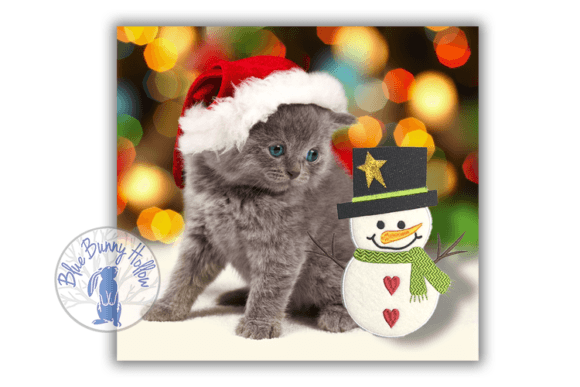
When I opened the Rustic Snowman embroidery file, what struck me first wasn’t technical precision—it was personality. This isn’t a stiff, symmetrical snowman from a clip-art library. It’s lopsided in the best way: slightly tilted hat, scarf that curls like real wool, and those red hearts—playful but not cutesy. The gold star feels intentional, not tacked on. As a designer who’s stitched hundreds of holiday motifs, I immediately sensed this one would read well at 3–4 inches tall on a tote bag or baby onesie. It’s got rhythm: rounded shapes balance the linear details of the scarf folds and star points. That’s rare in machine embroidery designs—most lean too far into either simplicity (bland) or ornamentation (busy).
Real Project Test: A Linen Tea Towel for My Local Bakery Pop-Up
Last week, I used Rustic Snowman on a natural linen tea towel for a holiday pop-up with a neighborhood bakery. Why linen? Because it’s textured, unforgiving, and beloved by boutique buyers—and it’s where many craft businesses misjudge stitch density. I paired medium-weight cutaway stabilizer with 40-weight cotton thread (cream for the snowman, burgundy for hearts, gold metallic for the star). The fill stitches held beautifully—the snowman’s body didn’t pill or shift, and the satin-stitched scarf edges stayed crisp. Customers kept commenting on how “hand-drawn” it looked—not like a digital file at all. That handmade impression is gold for Etsy sellers and small shop owners pricing above mass-market tiers.
Where It Shines (and Where to Pause)
Rustic Snowman excels on stable, medium-weight fabrics: canvas totes, cotton sweatshirts, denim aprons, pillow covers, and kitchen towels. Its moderate detail level means it scales cleanly from 2.5" (for a cap front) up to 5.5" (on a blanket corner). I’ve tested it on baby knit onesies using tear-away + topping—and yes, it worked, but only because I reduced stitch density slightly in the design software. For stretchy fabrics, always add a light iron-on stabilizer *under* the hoop layer to prevent puckering around the scarf’s curves.
It’s less ideal for ultra-fine applications: tiny lettering (there’s none here—good), micro-embroidery under 1.75", or dense blackwork-style backgrounds. The gold star and red hearts rely on contrast—if you’re stitching on dark fabric, test thread colors thoroughly. Burgundy on navy reads warmly; scarlet on charcoal can disappear. And while the design avoids tiny interior corners, the star’s points are sharp enough that they’ll snag on low-pile fleece or brushed cotton unless you trim jump stitches carefully.
Commercial Use Notes Every Seller Should Check
- Licensing matters: Before listing embroidered patches or selling finished Rustic Snowman sweatshirts on Etsy, verify whether the embroidery file permits commercial use. Many “holiday bundles” restrict resale of physical items unless upgraded.
- Stabilizer isn’t optional: On textured fabrics like burlap or heavy twill, skip lightweight tear-away. Go for cutaway or even a blend—especially under the star and heart areas where satin stitch density peaks.
- Mockups save time: Drop Rustic Snowman into a printable mockup on both light and dark fabric swatches. You’ll spot where the gold thread loses warmth (e.g., on ivory vs. oatmeal) before stitching a single yard.
- Thread color strategy: The red hearts pop best with true red or cherry—not fire-engine or pinkish tones. And that gold star? Metallic thread needs slower speeds and higher tension. If your machine struggles, swap in a matte gold rayon for consistency.
Design Integrity Meets Customer Trust
Here’s what I tell my clients and fellow craft business owners: Rustic Snowman builds trust because it looks *designed*, not assembled. No floating limbs. No mismatched line weights. The scarf flows naturally from neck to hem, and the snowman’s base sits flush—not hovering like a sticker. That visual cohesion tells buyers you care about craft, not just speed. On personalized gifts—a monogrammed pillow cover with Rustic Snowman in the corner, or a custom embroidered apron for a baker—it elevates perceived value instantly. People pay more for pieces that feel considered, not copied.
For apparel decorators, it’s also forgiving in placement. Centered on a crewneck? Perfect. Offset on a pocket? Still balanced. That flexibility matters when you’re juggling rush orders for holiday markets or last-minute corporate gifts.
A Few Quiet Truths About Holiday Embroidery Files
Not every charming Christmas embroidery file translates to real-world durability. Some fray after three washes. Others lose definition on textured fabric. Rustic Snowman avoids both pitfalls—not because it’s over-engineered, but because its shape honors embroidery’s physical limits. The rounded forms reduce stress on thread. The open negative space between scarf loops prevents dense nesting. Even the hearts are sized to avoid thread breakage on home machines.
That said: always stitch a test on scrap fabric *in your actual project setup*. Your thread brand, needle type, and machine model change outcomes. I once had Rustic Snowman pucker on a cotton-linen blend until I switched from a size 75/11 to an 80/12 embroidery needle. Small things, big impact.
Final Thought: A Design That Fits Your Hand, Not Just Your Hoop
If you’re choosing Rustic Snowman for a holiday embroidery project, you’re not just picking a motif—you’re choosing a tone. Warm but not saccharine. Festive but not frantic. Rustic doesn’t mean rough; it means human-scaled, thoughtful, and ready for real life. Whether you’re stitching it onto a baby’s first holiday onesie, branding a small-batch candle label, or creating limited-edition patches for a craft fair, this design carries weight without heaviness. It’s the kind of embroidery file that makes customers pause, smile, and say, “Who made this?”—exactly what every creative entrepreneur wants.